Commercial paper fulfils all your needs for funds without any collateral to exceed your requirements. No more stressing about debt with commercial paper on the rise.
Taking up the debt is part of business; just like consistency is important in business, the fund also plays a crucial role. To meet the financial needs, commercial paper works as a great source for large-sized businesses to fulfil financial needs.
NBFCs, financial institutions, and large companies hold active participation in short-term and long-term debt markets to borrow funds. Here comes the commercial paper to take on end-to-end financial requirements.
Some large-sized companies and financial institutions count on commercial paper to raise funds to meet end-to-end requirements of working capital, which includes payroll, payables, and inventory.
This is among the cost-effective ways to raise funds for your business over an extended period and can be issued up to a 5 lakh denomination.
Continue reading to open up each detail regarding commercial paper and what it adds to the table.
Types of commercial paper
Commercial paper encompasses various types, including drafts, bills of exchange, notes, and certificates of deposit.
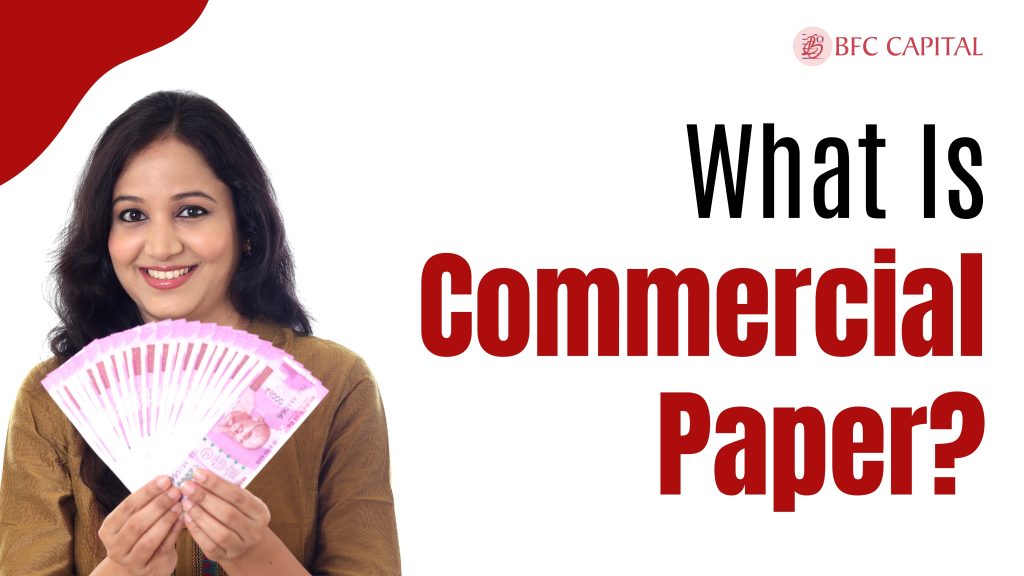
What is a Commercial Paper?
Commercial paper is an unsecured money market instrument that companies usually issue to meet short-term financing needs, which include salaries, inventory, and working capital.
This is considered a promissory note issued by financial institutions and exchanged between them. The maturity period of commercial paper falls between 7 days to a year.
To stay ahead of the short-term funds, SBI or a corporate firm issues a commercial paper.
Commercial Paper in India
Commercial paper was added to the market a few decades back in 1990 which signalled the perfect start to India’s financial reforms. Besides other debt options, commercial paper plays a perfect role for corporations with good credit ratings to borrow funds. Moreover, investors were able to invest in fixed-income debt through this instrument as well. Therefore, the Reserve Bank of India permitted primary dealers and financial institutions to raise short-term funds by issuing commercial paper. Additionally, while banks can hold or invest in commercial paper, they typically do not issue it themselves. The issuing entities are usually corporates or NBFCs with good credit standings.
Advantages of Investing in Commercial Paper
Cost
Cost is one of the advantageous factors for choosing commercial paper as your go-to debt option. It is among the most cost-effective options over others as it is only suitable for companies with good credit ratings. Hence, borrowers are turned to to pay a lower price compared to commercial loans.
No Collateral
Commercial paper is known to be the most popular unsecured loan option which makes it another appealing reason why it does not require collateral. Thus, borrowers do have to go through a long documentation process or paperwork to get the funds in hand.
Liquidity
Commercial paper brings to the table high liquidity and short maturities, making it an ideal investment option. The great creditworthiness of the borrower makes it more credible than other investments.
Disadvantages of Investing in Commercial Paper
Accessibility
Businesses with a high net worth and credit rating may issue commercial papers. Also, retail investors cannot access it since the minimum investment is 5 lakhs.
Interest Rate Risk
It comes with a fixed rate of interest, so any rise in the rate of interest during the investment tenure can lead to financial loss.
Lack of Transparency
Investors only get limited information about the issuer compared to securities that are publicly traded.
Features of Commercial Paper
- Short-term maturity
- High credit quality
- Unsecured debt
- Non-convertible
- Low-interest rate
- Low-cost
- Negotiable
- Traded in the money market
- Discounted
- Unregulated
Who can Issue a Commercial Paper in India?
A clear set of guidelines has been published by the RBI regarding the entities permitted to issue CPs (Commercial Papers) in India. A primary dealer, corporate borrowers with a high credit rating, and Indian financial institutions can issue Commercial Papers. Consequently, a commercial paper may be issued by any of the following means:
- Highly rated corporate borrowers, primary dealers (PDs)
- satellite dealers (SDs)
- All-India financial institutions (FIs) have been permitted to raise resources through money market instruments under the umbrella limit fixed by the Reserve Bank of India.
Roles and responsibilities of entities for Commercial paper
During the introduction of commercial paper, the RBI also specified rules for all parties involved:
Issuer
There are regulations for issuers laid out by the RBI. The violation of these guidelines could result in a fine or even a ban on issuing commercial papers.
Financing banking company
Commercial paper proposals are thoroughly scrutinised by financing banking companies as they comply with eligibility criteria for issuing debt instruments. Approval is granted only following the company’s successful passing of the scrutiny. The lending bank must reduce the corporate borrower’s working capital limit after issuing the Commercial Paper.
IPA
Before issuing the commercial paper, Issuing and Paying Agents (IPAs) must verify the issuer’s documentation, including Board Resolutions, Credit rating approval, financial records, etc. Following the scrutiny, IPA issues a certificate of approval.
A scheduled bank can only act as an IPA. For this reason, issuers must adhere to the guidelines prescribed and not dilute the object of investor protection.
SEBI
CPs that are proposed for listing should be mentioned in the letter of offer. A listing of the same will be the responsibility of the issuer, who will also follow SEBI regulations.
CRA
SEBI guidelines require credit rating agencies to follow when rating money market instruments. A rating agency must specify when the next rating review will occur and monitor the issuer’s credentials regularly. It is necessary to report any misconduct to IPA to reduce the rating.
Can Commercial Paper Mature in a Short Amount of Time?
CP can be issued for maturities between a minimum of 15 days and a maximum upto one year from the date of issue
Conclusion
The role of commercial papers in the economy has been crucial. Funds are required by companies today to expand and grow. The use of Commercial Paper can help corporations raise funds quickly, easily, and cost-effectively. Investors and issuers alike benefit from this credible, safe debt instrument.
Please share your thoughts on this post by leaving a reply in the comments section.
Also, check out our recent post on: “What Are Alternative Investment Funds(AIFs)?“
To learn more about mutual funds, contact us via Phone, WhatsApp, Email, or visit our Website. Additionally, you can download the Prodigy Pro app to start investing today!
Disclaimer – This article is for educational purposes only and by no means intends to substitute expert guidance. Mutual fund investments are subject to market risks. Please read the scheme-related document carefully before investing.