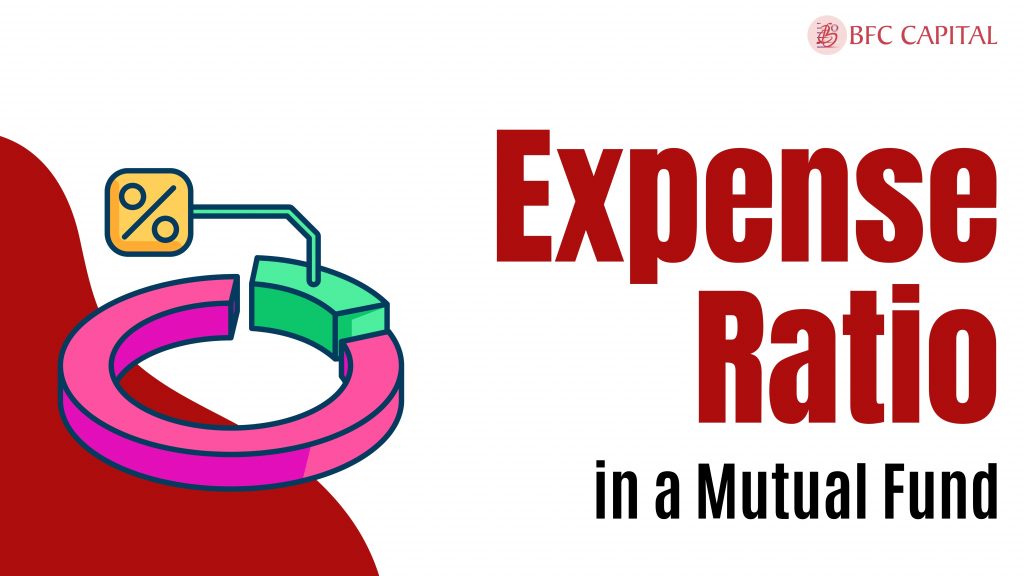
Introduction: Expense Ratio in a Mutual Fund
The expense ratio is an annual cost provided by mutual funds to cater for operational costs such as management fees, allocation charges, and advertising costs. The value of the expense ratio thus depends on the size of the assets managed. Smaller funds have higher relative expenses since the same proportion of limited capital must be used to run the fund most efficiently. On the other hand, larger funds dedicate a comparatively small percentage of their overall assets to costs which makes them have a low expense ratio. Thus, it can be concluded that the size of the mutual fund is inversely proportional to the expense ratio.
This is depicted by the formula: Expense Ratio =Total Expenses/Total Assets
When costs are constant and total, a higher asset base will lead to a lower expense ratio and vice versa.
Understanding Expense Ratio with Example
In this context, mutual funds expense ratio can be defined as yearly costs of financing its operating expenses and other charges such as management, administration and marketing among others, which are appended to all the investors. These costs are declared twice a year in a statement to give the financials a sense.
To determine the expense ratio let us consider an example. Assume that an equity mutual fund has an AUM of ₹ 700 Crores and total expenses of ₹ 14 Crores.
The expense ratio is calculated using the formula:
Expense Ratio = Total Expenses/AUM
= ₹14Cr/₹700Cr = 2%
This means that each investor will incur an expense ratio of 2 % of the total investment made by him which is charged on an annual basis but is charged daily.
Key Components of the Expense Ratio
- Management Fees: The assets invested in a fund are generally split into portions. This fee will fund managers who investigate and find good investment opportunities.
- Administrative Costs: These include the costs of record-keeping, transactions, and customer support, which are critical for the functioning of the fund.
- 12-b1 Fees: Since the rule that permits its charging is contained in the section 12(b)(1) of the SEC Act, the fees are referred to as 12b-1 fees. The rule allows such fees to be paid out of fund assets provided the fund has developed a plan for the payment referred to as 12b-1 plan. These are expenses such as fees for marketing and distribution that are incurred in the marketing of the mutual fund and attracting more clients.
- Brokerage Fees: In regular plans, the AMCs tend to outsource the transactions to the brokers, making the expense ratio much higher. This cost does not apply to direct plans for the execution of transactions because these plans are managed internally.
What role does it play in determining a Funds Return?
Net Asset Value or NAV is the total asset value of a mutual fund scheme divided by the number of outstanding units, expense ratio is the summary of all yearly expenses made by the mutual fund scheme, which is mandatory subtraction from the NAV. This leads to lower net returns for the investor because a larger part of the returns are liable to the expense ratio. Hence, the amount of money that is used to pay the expenses with the value of the fund is crucial when selecting a mutual fund.
Calculation
You are thinking about three mutual funds Fund A, Fund B and Fund C with different expense ratios.
Fund A: 0.10%
Fund B: 0.75%
Fund C: 1.50%
Below is the yield that you would expect to pay in annual fees if you invested INR10,000 in any of these funds:
Fund A: 10000 × 0. 10% = INR10
Fund B: = $10,000 × 0. 75% = INR 75
Fund C: $10,000 × 1. 50% = INR 150
Thus, you would contribute $10 annually in Fund A, and $75 in Fund B, while the contribution in Fund C would amount to $150.
In terms of cost, Fund A is more cost-effective than the other two funds, while Fund C is costlier than Fund A and Fund B. Eventually, these variations in fees can add up to a large extent to your total net earnings. If all three funds produce the same gross returns, Fund A will leave you with the highest net return because of its low expense ratio while it would be lower with Fund C, a fund with the highest expense ratio.
Benefits of Expense Ratio
The expense ratio, while representing a cost to investors, also offers several benefits:
- Professional Management: The expense ratio provides for the cost of the professional fund managers who tend to manage your assets, making wise decisions to generate the best returns.
- Convenience: Mutual funds offer several amenities and help a naive investor avoid conventional pitfalls that an inexperienced investor meets and results in losing all his/her invested money. The various techniques in fund management, different strategies, and corresponding expected rate of returns, the possibility of investing in a plethora of assets with relatively lower amounts of capital and in exchange for such services, they take a minimal percentage as their fee.
Bottom Line
The expense ratio is quite important in determining the total return on an investment that an investor will make in future. Perhaps it is not a large percentage but it is a regular expense that reduces profit margin by a small amount at a time. The smallest change in the ratio of expenses can mean a huge difference in your earnings throughout the years. This is why it is important to be up to date and to observe these fees. It indicates that focusing on the expense ratio and leaving nothing to assume is a game changer when it comes to managing your funds. It is important to get relaxed when making investment decisions to gain optimum amounts in the long run.
Please share your thoughts on this post by leaving a reply in the comments section.
Also, check out our recent post on: “How to File Income Tax Return (ITR) for Mutual Funds on New Tax Portal – 2024“
To learn more about mutual funds, contact us via Phone, WhatsApp, Email, or visit our Website. Additionally, you can download the Prodigy Pro app to start investing today!
Disclaimer – This article is for educational purposes only and by no means intends to substitute expert guidance. Mutual fund investments are subject to market risks. Please read the scheme related document carefully before investing.



Name: What are Conservative Hybrid Mutual Funds? - BFC Capital- Blogs : All Financial Solutions for Growing Your Wealth
says:[…] Also, check out our recent post on: “What is the Expense Ratio in a Mutual Fund? Formula and Calculation“ […]