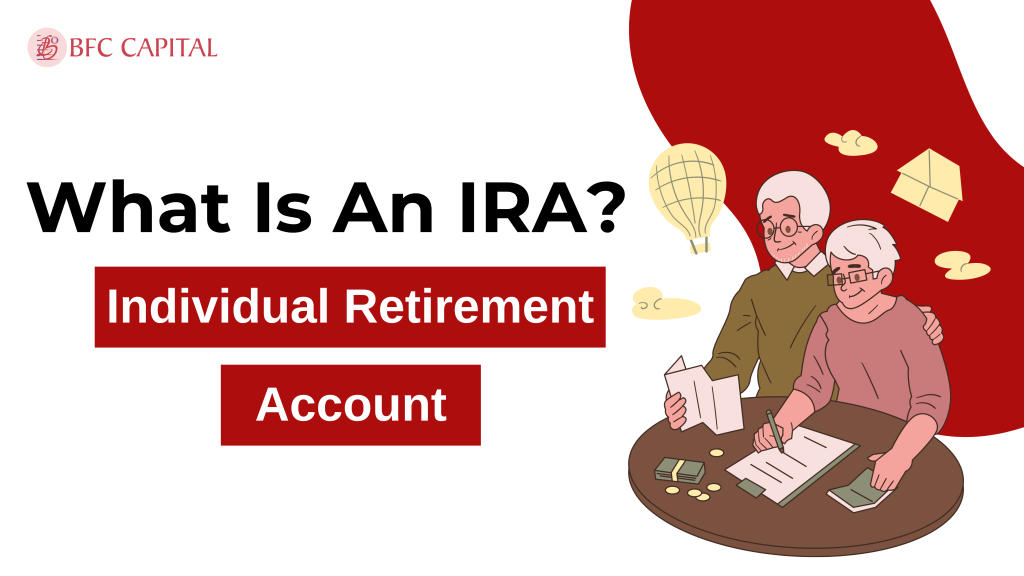
Planning your retirement may seem formidable, but it doesn’t have to be. Ever wonder how some people could retire without a care in the world? IRAs are often overlooked, but they are a very powerful answer. Individual retirement accounts are designed so that an income stream can be created that supports a no-sweat, financially secure lifestyle during the golden years of your life.
Knowing the types, the rules, and the regulations is quite important in any form of investment. In this article, we will discuss how everybody can find the secret to a stress-free retirement and, importantly, how an IRA can play a vital role in delivering peace of mind.
So, let’s get started!
What Is An IRA?
Let’s start with knowing what IRA is;
An IRA is an Individual Retirement Account—a specially designed account that helps people prepare for retirement by stashing money in a tax-favoured way. There are two types of IRAs: the traditional and the Roth.
Each type has specific eligibility requirements and tax characteristics. The contribution to a traditional IRA comes from pretax dollars, whereas the contribution to a Roth IRA is from after-tax dollars. Normally, any IRA—whether Roth or Traditional—attracts tax benefits, but how withdrawals and taxes on any type of IRA may be different.
The best IRA for an investor depends on so many variables like investment goals, risk, fees, and investment options. Besides those, you need to know the rules for IRAs, how much one can contribute, how to withdraw, and tax consequences that would help you know exactly what rules to follow.
Types of IRAs
There are two major kinds of IRAs: traditional IRAs and Roth IRAs. Each has its own eligibility requirements and taxation effects. Contributions to a traditional IRA are, by and large, tax-deductible, and for a Roth IRA, the contributions are from after-tax income. Also, the tax benefits within and the rules regarding the withdrawal from these two types of IRAs differ.
Tax benefits of IRAs
Evaluating the tax benefits will help you to make a proper investment without worries!
One major advantage of having an IRA is the tax advantage accruable to them. These tax benefits could vary depending on the type of IRA one has, which could be a traditional IRA or Roth IRA.
- Contributions to traditional IRAs are, in fact, tax-deductible. The money one puts into an account will, therefore, normally be tax-deductible. It may reduce your taxable income for the year and lower the amount of income tax due.
- Contributions to a Roth IRA are made in after-tax dollars. Hence, there is no upfront tax deduction. The key tax benefit of the Roth IRA, though, is that the qualified distributions in retirement are tax-free, including any investment earnings.
Generally speaking, IRAs allow retirement funds to grow either tax-deferred or tax-free. In consideration of that, they offer second-to-none opportunities that help achieve retirement planning and guarantee financial security in the long run. A discussion with a financial advisor or tax professional will help in understanding the exact benefits and tax implications given the individual situation.
Factors consider while choosing the right IRAs
Factors to consider when deciding on the correct IRAs involve you:
- Investment goals
- Risk tolerance
- Fees
- Investment options
- The level of customer service offered by the financial institution
Consideration must also be given to tax implications and possible penalties connected with withdrawals from the IRA.
Tax implications of IRAs
Tax implications of IRAs: Generally, contributions to any traditional IRA are tax-deductible, thus reducing generally your taxable income for the year. All money in a traditional IRA, however, is subject to tax upon withdrawal during retirement. In contrast, contributions to a Roth IRA are made with after-tax dollars. As such, qualified distributions in retirement, plus investment earnings, are tax-free. It is important to keep in mind these tax implications and other potential penalties as one works through decisions relating to withdrawals from an IRA. Financial advisors or tax professionals will be able to help guide the best course forward based on the specific situation.
Rules for investment in IRAs
Investing in an Individual Retirement Account is controlled by the Internal Revenue Service, commonly abbreviated as IRS. Contribution limits, forbidden transactions, minimum distributions, and many more add to its lots rules. It is, therefore, incumbent on knowing the rules to avoid being deemed non-compliant by the IRS.
IRA Withdrawal rules
The rules of withdrawal from the IRA differ depending on the type of IRA account that is used. Traditional IRAs often have a penalty for early withdrawal before 59½ along with regular income tax, while in the Roth IRA, there is no time when contributions are not tax-free or beyond penalty. The early withdrawal penalty does not apply to withdrawals made beyond the age of 59½, although they are taxed as normal income, in the case of a traditional IRA. These rules are, therefore, worth knowing and taking seriously when a decision has to be made for withdrawal from an IRA.
Risk factors
Investment risk, interest rate risk, inflation risk and tax law changes are some of the risks associated with IRAs. Market risk would be the possibility of a change in value investments based on market conditions.
Interest rate risk: A change in interest rates may adversely affect the returns issued on the fixed-income investments that compose the IRA.
Risk of inflation: The IRA will partly suffer from purchasing power erosion during an inflationary period. Apart from that, changes in tax law may also impact how contributions to the IRA, distributions from the IRA, or gains on investment in an IRA are taxed. Such risk factors should be considered during IRA management to aid in better investment decisions.
On a parting note…
Ultimately, an IRA is a very powerful tool designed to help people plan adequately for a secured retirement. There are two major types of IRAs, traditional and Roth, which have different eligibility requirements and tax characteristics. IRAs offer tax advantages that help lower taxable income while letting retirement funds grow either tax-deferred or tax-free. The correct IRA for any particular investor will depend on a lot of factors, including investment goals, risk tolerance, fees, investment options, and customer service quality at the financial institution where you open an IRA.
It’s also important that you are aware of the impact on taxes and the rules on investing in IRAs. Contributions to a traditional IRA are tax-deductible, but contributions made to a Roth IRA are with after-tax dollars; qualified distributions in retirement are tax-free. It should be noted that each of the decisions concerning IRA withdrawals may have some penalty or tax issue attached. IRA type also matters in withdrawal rules: for example, in a traditional IRA, there are usually penalties on early withdrawal, while Roth IRAs are quite lenient.
In other words, IRAs are a very important tool for retirement planning since they offer a tax-deferred mode through which one can save for the future.
Please share your thoughts on this post by leaving a reply in the comments section. Contact us via Phone, WhatsApp, or Email to learn more about mutual funds, or visit our Website. Alternatively, you can download the Prodigy Pro app to start investing today!
Disclaimer – This article is for educational purposes only and does not intend to substitute expert guidance. Mutual fund investments are subject to market risks. Please read the scheme-related document carefully before investing.







Name: How to Increase Credit Score?
says:[…] Please share your thoughts on this post by leaving a reply in the comments section. Also, check out our recent post on: “What Is An IRA (Individual Retirement Account)?“ […]