Dematerialisation
With the era of digitisation, the financial world has been revolutionised—largely by the process of Dematerialisation. It has changed the manner in which investors hold shares in the share market and given a safe, effective, and convenient mode of investment management. As a result of a huge push by regulatory bodies like SEBI (Securities and Exchange Board of India), dematerialisation has now replaced the ancient method of holding physical certificates, which have now been replaced by electronic ones.
Whether you are an experienced investor or just starting out, knowledge of dematerialisation and its advantages can greatly enhance how you handle your financial resources. Let’s look at what it is, how it operates, and why it’s transforming financial markets worldwide.
What is Dematerialisation?
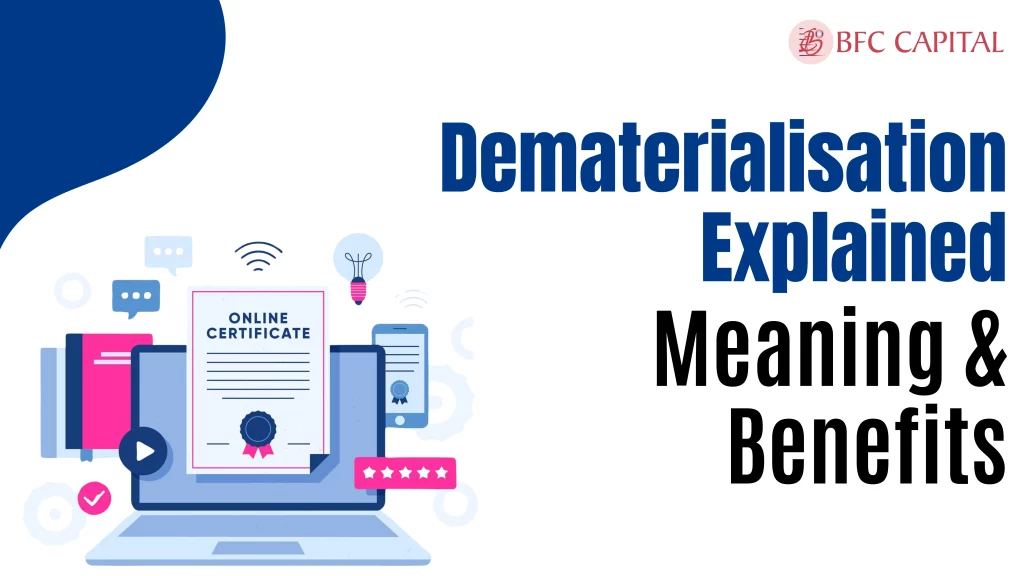
Dematerialisation is a process of replacing physical certificates like stocks, bonds, and debentures with a computerized equivalent. It eliminates the use of paper certificates and enables one to hold securities electronically through a demat account.
Such a change is an essential part of paperless trading that not only reduces dependency on papers but also ensures digital recordkeeping and an easy procedure for all parties. It is a revolutionary shift from the traditional way of investment to a modern system founded on transparency and technology.
The Evolution and Role of SEBI
India’s journey towards full dematerialisation started in the mid-1990s, with SEBI taking the initiative. The government felt the inefficiency and cheating so common in trading in paper form, move from forged certificates to signature mismatch and delayed deliveries.
SEBI responded to these with a regulation that all dealing in listed stocks must be done through dematerialized form. They introduced two big depositories:
National Securities Depository Limited (NSDL)
Central Depository Services (India) Limited (CDSL)
These organizations, through their system of Depository Participants (DPs), facilitate the operation of demat accounts, by which investors can hold and deal in electronic securities in a smooth and efficient way.
Principal Advantages of Dematerialisation
1. Improved Security and Avoidance of Frauds
Certificates that are shared in tangible/physical form can be stolen, lost, and destroyed. With dematerialisation, these are virtually removed. Digital securities involve encryption devices, secure access systems, and back-up systems, making fraud prevention much better and reducing avenues for loss or theft significantly.
2. Reduced Paperwork and Lower Risk
These were the times when investors used to spend hours filing forms and maintaining manual records. Reduced paperwork not only increases efficiency but also reduces human mistakes, which, in turn, result in lesser risk for the brokers as well as the investors.
3. Effective Transactions and Settlements
The electronic system facilitates quicker settlement. In contrast to the situation with physical trading when settlement could take days, dematerialised trading delivers settlement efficiency, usually on a T+1 or T+2 basis (trade date plus 1 or 2 days).
4. Cost-Effective Operations
Printing, stamping, couriering, and warehousing paper certificates are very expensive. Dematerialisation reduces costs considerably, making trading cost-effective for retail and institutional investors.
5. Easy Transfer and Ownership Changes
With electronic securities, ownership transfer becomes a click-away affair. With this easy transfer, investors are able to easily sell or pass on their shares, making their portfolios more manageable.
6. Transparency and Accountability
All dealings are recorded electronically, with an electronic audit trail left behind. This keeps investors continuously aware of their holdings, past transactions, and company actions such as dividends or bonus issues.
7. Investor Convenience and Accessibility
Thanks to demat accounts, the portfolio is easily accessible at any time from any place. Such investor convenience at this stage follows expectations about flexible and orderly nature of household funds in current times.
8. Effective Corporate Actions
Mechanized handling of bonus issues, rights issues, and dividend disbursements in demat reduces delays and error involved in handling manually. For issuers, as well as investors, there is trouble-free sailing.
How Does Dematerialisation Work?
This is the step-by-step dematerialisation process:
Open a Demat Account: Choose a registered Depository Participant (like a bank or broker) and submit your KYC documents.
Submit DRF and Certificates: Complete in a Dematerialisation Request Form (DRF) and present it along with physical certificates to your DP.
Verification and Processing: Your request is routed by the DP to the depository (NSDL/CDSL) and verified for genuineness.
Conversion and Credit: Your physical securities are burnt once they get cleared, and the same number of electronic securities is credited into your demat account.
Regulatory Safeguards and Market Trust
The regulatory system established by SEBI provides protection to investors at all stages. Periodic audits, mandatory disclosures, and the deployment of electronic voting machines to shareholders ensure that the rights of investors are safeguarded. With the system incorporating transparency and accountability, investor faith in the market has increased largely.
Further, dematerialisation assists in preventing market manipulation, money laundering, and round-tripping by facilitating improved surveillance through electronic records.
Real-World Impact: A Case Study
Imagine a person in the 1990s who needed to sell shares. They’d have to locate the paper certificate, sign it, send it by courier and hope that the buyer received and accepted it. Weeks might go by and there were risks involved.
Currently, with dematerialisation, the same transaction occurs within minutes. The buyer and seller can trade on an electronic platform, execute the transaction, and see the updates in their demat accounts almost immediately. This faster settlement and convenience to the investor have promoted retail investment growth in India.
Also, Check – What Is ASM in the Stock Market?
Conclusion
The concept of dematerialisation has been a monumental stride towards building a safe, efficient, and investor-friendly capital market. By eliminating physical certificates, reducing costs, and ensuring smooth digital interactions, dematerialisation is the foundation of an inclusive financial future.
As we continue to adopt paperless trading and promote electronic record keeping, it’s essential for investors to be aware and utilize this system to its best capacity. Whether it’s equities, mutual funds, or bonds, a demat account is your portal to new-generation investing.
Please share your thoughts on this post by leaving a reply in the comments section. Contact us via Phone, WhatsApp, or Email to learn more about mutual funds, or visit our website. Alternatively, you can download the Prodigy Pro app to start investing today!
Disclaimer – This article is for educational purposes only and does not intend to substitute expert guidance. Mutual fund investments are subject to market risks. Please read the scheme-related document carefully before investing.