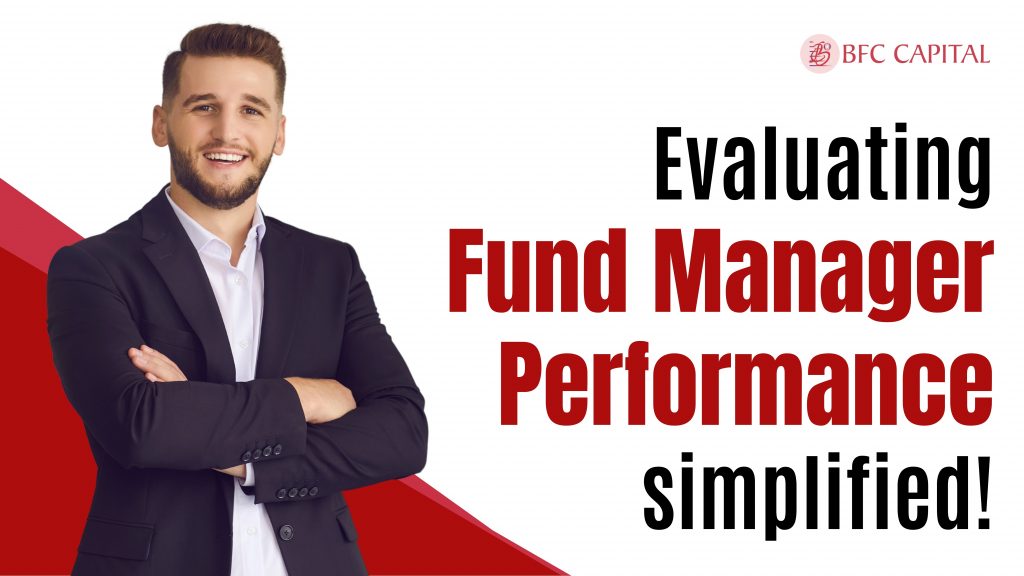
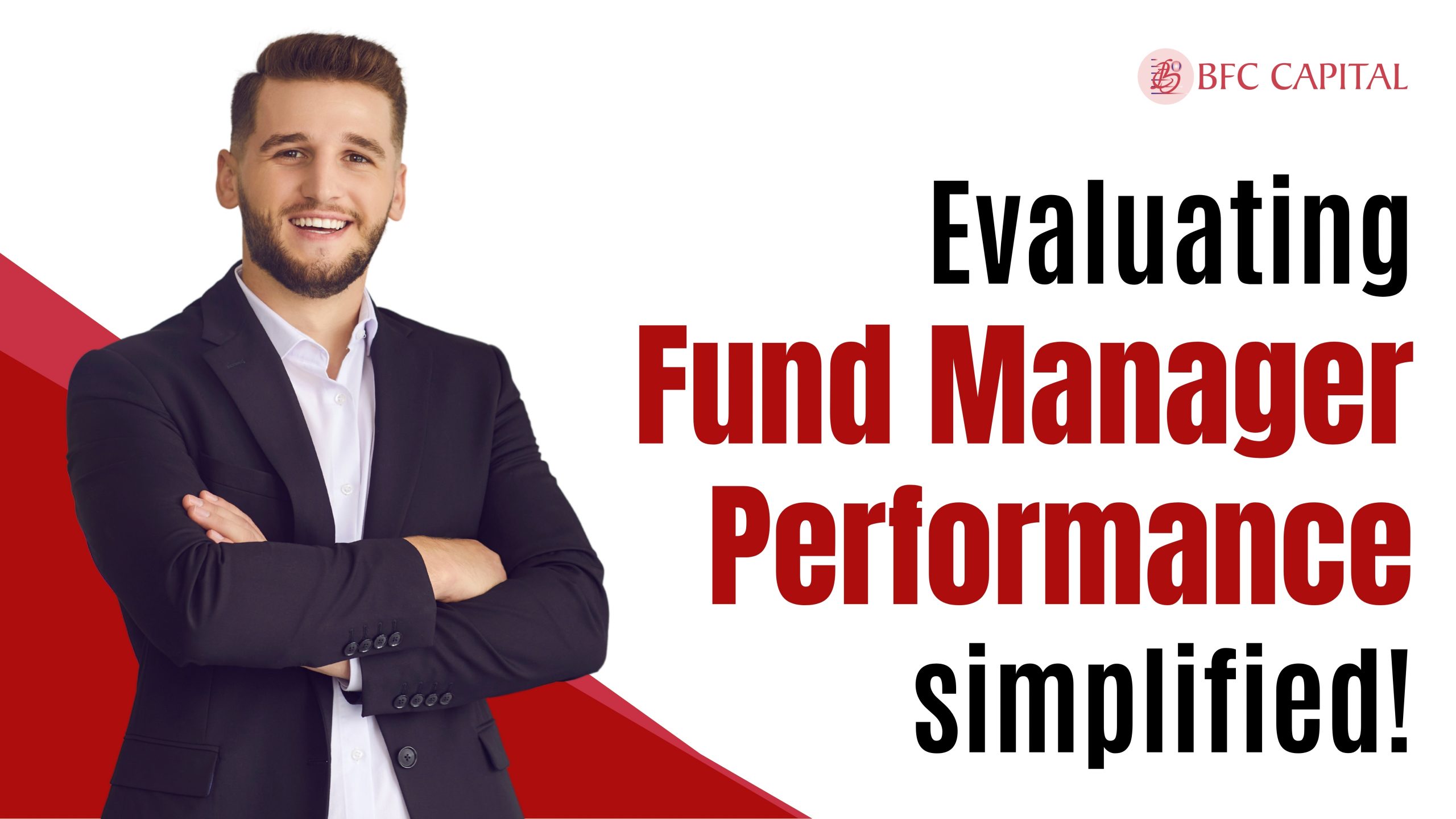
Investment is a basic need to ensure financial stability in life. But unfortunately, people find this investment topic extremely complex. Therefore, they either start to invest on their own and learn from their mistakes or they seek the help of fund managers through AMCs’. Before choosing the second option you should have done some analysis first, for example evaluating the performance of your fund manager and also understanding the key metrics of an investment portfolio’s performance. In terms of making more informed decisions, understanding these two things will help you a lot. So let’s get started.
Guide To Evaluate Fund Manager Performance
A successful fund manager can give you exceptional returns and simultaneously they can reduce the uncertainty of your investment as well. This is why before you choose an MF (Mutual Fund) it is essential to evaluate your fund manager’s performance. Here are the parameters that will certainly help you.
-
Check The Investment Style
Checking the investment style or the philosophy of your fund manager is essential to understand whether their strategy matches your goals or not. Before starting the mutual fund, investment style can be checked in the fund’s factsheet provided by the AMC. The managers may believe in a long-term investment or short-term investment, or they may choose value stocks over growth stocks, whatever their reference is, you must understand that to evaluate your fund manager’s performance.
-
Investment Following The Mandates
When you are choosing a MF it will always have a category. Let’s say you’ve selected large-cap MFs, and then the allocation in large-cap stocks has to be 80% because it is mandated by the SEBI. No fund manager can in any stance escape this. He necessarily needs to invest 80% in large-cap stocks. Before investing make sure you are aware of this condition.
-
Reviewing Past Performance
Conducting a cross-check regarding work history is a very crucial thing when you give certain responsibilities to any professional. Similarly, when you are dependent on fund managers you must check their past performance to hold your trust in their promises. If the manager has taken over any funds in recent days then you may plan to invest. Also if the manager is continually outperforming then they can be a good fit to start your investment.
-
Expense Ratio
When you are investing through AMCs you must have a clear understanding regarding all your expenses. The expense ratio helps to measure the annual operating expenses of a mutual fund or an exchange-traded fund. Checking the expense ratio can be significantly impactful for long-term returns because it helps to identify cost-effective investments.
-
Total Return
Total return is one of the most extensive ways to measure how an investment is performing. Starting from dividends, and interest income to capital gain it includes it all. The calculation of total return means comparing the initial value of the asset to the current value, including any income received. To get an overall view of how much your investment has grown calculating total return is the easiest way.
Once you are aware of the performance of your fund manager, you should find out the key metrics to understand the investment portfolio’s performance as well. These are vital to know before investing in MFs
The Key Metrics To Consider,
Evaluating the performance of a fund manager is essential if any investor prefers to invest with 100% confidence, and for that, you must be aware of key metrics. Understanding these metrics deeply will not only help you to make more informed decisions but also manage risk factors. Here we’ll be representing 5 valuable metrics for the investors in terms of evaluating fund managers. So quickly have a look right below,
-
Sharpe Ratio
One of the most significant metrics Sharpe-ratio helps the investors to understand how much returns they get compared to the risk they have taken. According to various sources, if the shape ratio is higher then it can be considered a better performer. To calculate the Sharpe ratio you’ve to divide the excess return (risk-free rate) by the standard deviation of returns.
-
Alpha
To measure the performance of an investment relative to a benchmark index, this alpha metric is used. There is also positive alpha and negative alpha, one indicates the outperformance of an investment, and the other one indicates underperformance accordingly.
-
Beta
To understand the sensitivity to the market movement Beta metric is used. There are 3 conditions, a beta of 1 means the investment moves in line with the market. A beta greater than 1 indicates high volatility and less than one beta means lower volatility. To assess the investment, understanding beta is necessary.
-
Information Ratio
Information ratio or IR is basically used to measure the ability of a fund manager to generate excess return relative to a given benchmark. This metric is calculated by dividing the excess return by tracking error. Information ratio is extremely useful when you try to evaluate active fund managers who want to beat their benchmark.
-
Tracking Error
It measures the deviation of returns of your investment from its benchmark indexing, lower tracking error suggests close alignment with the benchmark, which is better for passive investment strategies.
To understand the condition of your investment evaluating fund manager performance is highly essential through the metrics we have discussed here. Remember one single metric will never clear the entire picture, you need all of them along with qualitative and quantitative factors. Aside from this when you regularly view these metrics it helps you to have a clear track of achieving your goals at the earliest.
Please share your thoughts on this post by leaving a reply in the comments section. Contact us via Phone, WhatsApp, or Email to learn more about mutual funds, or visit our website. Alternatively, you can download the Prodigy Pro app to start investing today!
Disclaimer – This article is for educational purposes only and does not intend to substitute expert guidance. Mutual fund investments are subject to market risks. Please read the scheme-related document carefully before investing.





Name: What are Short-Term Capital Gains (STCGs) in Mutual Funds? - BFC Capital- Blogs : All Financial Solutions for Growing Your Wealth
says:[…] Also, check out our recent post on: “How to Evaluate Fund Manager Performance: Key Metrics to Consider“ […]