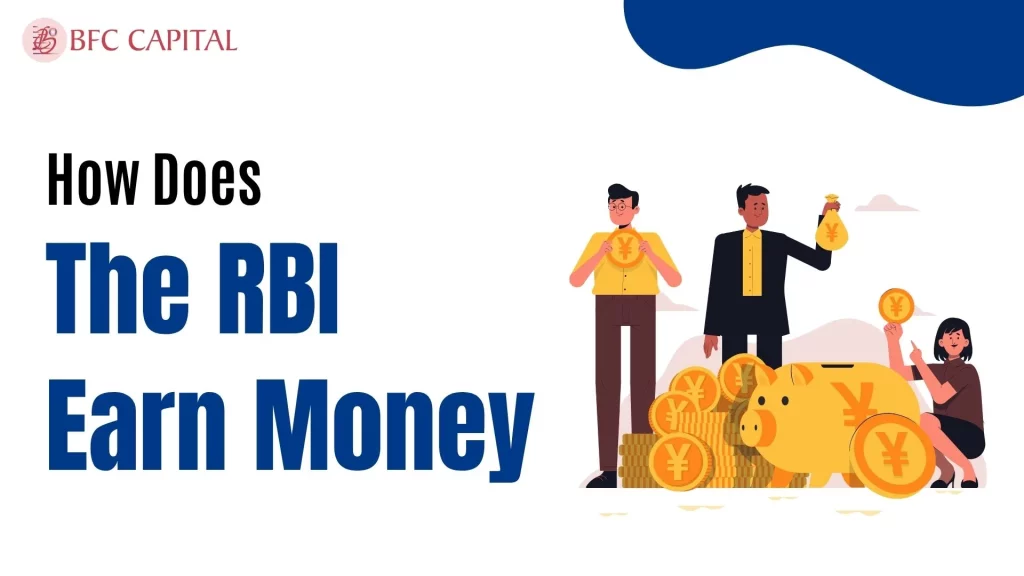
RBI Earn Money
Before we dive in today, I need to get something off my chest—thank you, Reserve Bank of India!
Wait, wait. I know what you’re thinking—“Why is this person thanking the RBI? Have they started giving cashback or something?”
Nope. Nothing like that.
There’s a small story behind this.
Just a few days ago, I was out having dinner with a bunch of friends. Casual conversation, good food, laughter and suddenly, out of nowhere, one of them asked, “How does the RBI earn money?
Because honestly, we all know the RBI is not selling iPhones, it doesn’t run a YouTube channel (unfortunately), and yet—hold your breath—it gave a ₹2.69 lakh crore dividend to the government!
Yes, you read that right. Not ₹2,690. Not ₹2.69 million. A full ₹2.69 LAKH CRORE.
So now the real question that comes to our mind is how?
Let’s break it down.
First, A Quick Reality Check
The RBI’s primary job isn’t to make money. That’s not what it was designed to do.
Its real job is to keep India’s economy stable.
That means:
- Controlling inflation
- Managing the value of the Indian rupee
- Ensuring smooth payment systems
- Maintaining financial order across the country
But here’s the kicker: while doing all of that, the RBI still ends up making serious money. And today, we’ll unpack exactly how.
The 5 Big Ways RBI Earn Money
These are 5 ways of RBI Earn Money.
1. Interest Income from Government Securities
Let’s start with the big one. The RBI holds a massive amount of government bonds and treasury bills. We’re talking lakhs of crores.
And guess what bonds do? They pay interest.
Now imagine this—when you invest in a fixed deposit, you earn interest on your money. The RBI does the same thing—but on an unimaginably large scale.
So even though they’re not trying to “invest for profits,” the interest adds up. Big time.
2. Earnings from Forex Reserve
The RBI maintains a huge pool of foreign currency reserves—U.S. dollars, Euros, Yen, gold… you name it.
And those reserves don’t just sit in a locker gathering dust. They are invested wisely.
The RBI earns interest or capital gains on those reserves. A perfect recent example? Gold.
Gold prices soared, and so did the value of the RBI’s gold reserves.
3. Income from Market Operations
The RBI buys and sells government securities in the open market to control the money supply and inflation.
But here’s the twist—while these trades aren’t done for speculation or profit, many of them end up being profitable.
So yes, the RBI technically does trading. And it earns from that too.
4. Fees from Banks
Now this one’s low-key, but smart.
All Indian banks interact with the RBI for things like RTGS, NEFT, clearing settlements, and managing public debt. And for these services, the RBI charges fees, just like a payment gateway charges a tiny percentage on every transaction.
Now multiply that by the number of transactions happening in a country like India.
Exactly. That’s a neat little passive income stream right there.
5. Seigniorage: The Currency Printing Profit
Here’s where things get interesting.
To print a ₹500 note, it costs the RBI somewhere around ₹3 to ₹4.
But when they issue that note to the public, it holds a value of ₹500.
So, the difference—₹496 to ₹497—is pure profit. This is called seigniorage income.
And because only the RBI is allowed to print currency, this profit goes entirely to them.
But How Does This Affect You and Me?
Great question. Because let’s be honest—how much the RBI makes doesn’t change what we pay for coffee, right?
Well… indirectly, it kind of does.
Here’s how this surplus helps all of us:
- Lower Fiscal Deficit: The government doesn’t need to borrow as much. That’s good for the economy.
- More Government Spending Power: With extra cash, the government can spend more on infrastructure, welfare, and growth.
- Higher Market Liquidity: More money flows into the system, which can lift both equity and debt markets.
- Better for Investors: Especially long-term investors and those holding debt funds.
- Stronger Market Sentiment: Confidence in the system grows. And confidence is everything in the world of money.
In short, a financially strong RBI means a more stable rupee, a more resilient economy, and healthier markets.
What Does BFC Capital Think?
At BFC Capital, we see this as more than just a news headline. This is an opportunity.
More liquidity in the system? Check.
More spending room for the government? Check.
Favourable climate for equity and debt investors? Absolutely.
So, if you’re someone who’s investing—or planning to—this is your cue to:
- Stay invested
- Stay informed
- Stay alert
Because the market reacts to every beat of the economy. And this beat? It’s a strong one.
Also, Check – Arbitrage Funds vs Liquid Funds
Final Thoughts
Next time someone casually asks, “How does the RBI earn money?”—you’ve got the full breakdown.
From interest income to forex management, currency printing to bank fees—RBI isn’t just regulating India’s financial system… it’s quietly making money doing it.
And quite honestly, doing a pretty solid job at both.
So yes, once again—thank you, RBI.
And thank you, reader, for making it this far!
If you found this breakdown helpful, don’t forget to share it with your friends. Let’s make finance conversations a little more fun, a lot more human, and totally jargon-free.
Please share your thoughts on this post by leaving a reply in the comments section. Contact us via phone, WhatsApp, or email to learn more about mutual funds, or visit our website. Alternatively, you can download the Prodigy Pro app to start investing today!
Disclaimer: This article is for educational purposes only and does not intend to substitute expert guidance. Mutual fund investments are subject to market risks. Please read the scheme-related document carefully before investing.