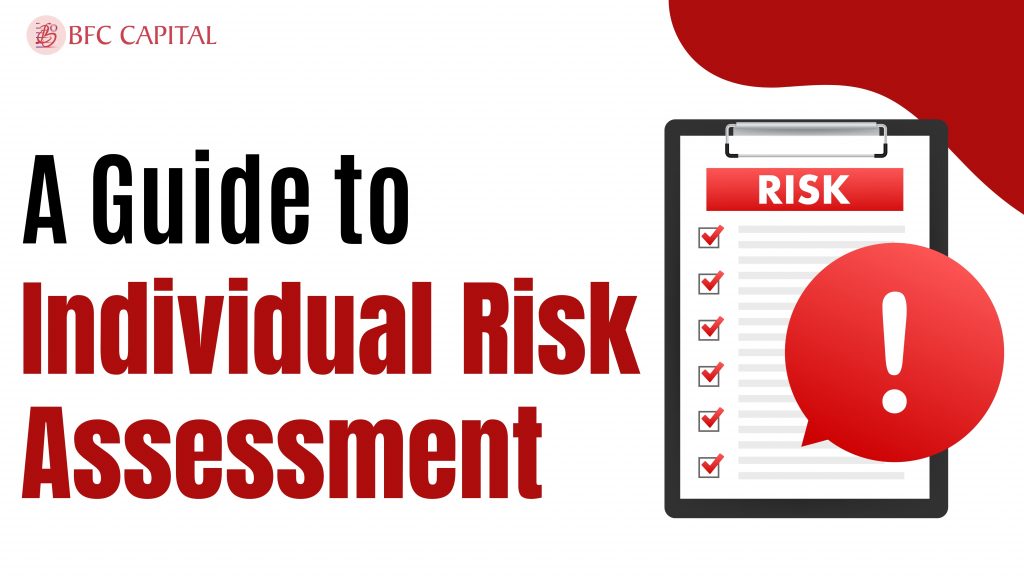
In today’s generation, investment is the only where money will work for you, but for that, people need a strong knowledge first. Unfortunately, that knowledge is rare among all of us and that’s why people get easily convinced by financial advisors to invest their hard-earned money without checking the return percentage and other conditions. The investors sometimes intentionally overlook several additional considerations for their profit. A risk is among the most important of all the considerations. When you’re choosing an investment, it’s still important to consider both returns and your risk tolerance. Understanding your risk profile enables you to make decisions about how much risk tolerance you have. Therefore, before heedlessly making any decision regarding financial investments, it is vital to clearly understand your risk tolerance level.
The question that now arises is: How can you assess your risk profile? We hope that the discussion we are going to have will help you to develop a better knowledge of risk profiles, so let’s get started first,
Look At The Current Portfolio
Before getting involved in the deeper conversation you need to know what a current portfolio means. Well, in simple words the investment you are making will be visible in a list, that list is known as the current portfolio. The rate of profit and loss will also be reflected in your current portfolio. You may wish to consider if you have invested in really safe plans to lower the riskiness of your portfolio. When you do so it would always help you to have less riskier profile at the initial stage, in order to reach your long-term financial goals and would also mean giving up some potential profits.
Therefore, this is always advisable for everyone to reshape their investment portfolio and implement a goal-based investing plan. Because a longer-term plan ensures that short-term volatilities do not affect the final return on your investment, you can thus invest in equity-related products and take on greater risk if you have that flexibility of time. However, investments intended to meet your immediate objectives may fall within the fixed-income or liquid investment categories.
Knowledge Of Equity
The best investment one can ever make depends on market knowledge. It will not only help you to get a clear concept of the market condition but also you will invest your money with more confidence. Apart from this, investing in high-risk equities necessitates having sufficient market expertise. So depending on your knowledge, first learn about where to invest and then meet all your needs (based on your risk tolerance).
An excellent option if you are an active investor who is looking forward to protecting your future is to invest in market securities. It will be necessary to have a deep idea of the equity market to evaluate equity-linked schemes, which allocates 65%-80% of the portfolio in equity. Moreover, it can also be an amazing deal for retirement planning, education for kids, and wealth generation, but before jumping into the ocean of equity and investment remember to have a great grip during the volatile market conditions.
Career Overview
One of the main factors that will affect your tolerance level is your income. You should feel comfortable taking greater risks if your monthly income is high or sufficient. When you have that flexibility with your income, little losses in your portfolio won’t have an impact on your capacity or ability to make investments.
Generational Wealth
Generational wealth is nothing but just a blessing to your family. But the question is always with the amount. The more money you have as a family wealthy you will be comfortable taking risks but if the amount is minimal you should not be manipulated to take any risk. You should choose capital protection above expansion if the loss of that money would push your finances too far. Put your money in more conservative plans, given by your financial advisor. But at that point also do your own research first.
Individual Overview
An investor’s age has a significant role in determining their risk tolerance level. You can consider investing more in riskier assets if you are a young professional with almost no responsibilities and a long investment tenure. But on the opposite side, this might not be an appropriate idea if you are dependent on your parents, spouse, or kids or if you have endless responsibilities for your family. In such a situation, you might want to consider investments that offer both security and better returns. Your existing financial status and financial boundaries, such as your children’s schooling and marriage, will continue to play a significant role in determining how willing you are to take risks. Always remember you can add high-risk investments to your portfolio if you have enough money to achieve your short-term objectives.
Wrapping Up
Nowadays even young stars are showing interesting investment opportunities. So starting from day one you will benefit greatly from assessing the risk profile, particularly if you are just a beginner. Because it helps to set realistic expectations and provides a great opportunity to see your tolerance level and understand the objectives.
If you have come so far then we hope you have understood the seriousness of assessing risk factors in your portfolio. The key to getting high returns on your investments is you have to analyze the risk-return balance that you can comfortably manage. Therefore, the next time you hear of an investing opportunity, consider doing deep research first and assess the risk profile as per our guidance or not if it fits your risk tolerance level.
Please share your thoughts on this post by leaving a reply in the comments section. Contact us via Phone, WhatsApp, or Email to learn more about mutual funds, or visit our website. Alternatively, you can download the Prodigy Pro app to start investing today!
Disclaimer – This article is for educational purposes only and does not intend to substitute expert guidance. Mutual fund investments are subject to market risks. Please read the scheme-related document carefully before investing.