Introduction
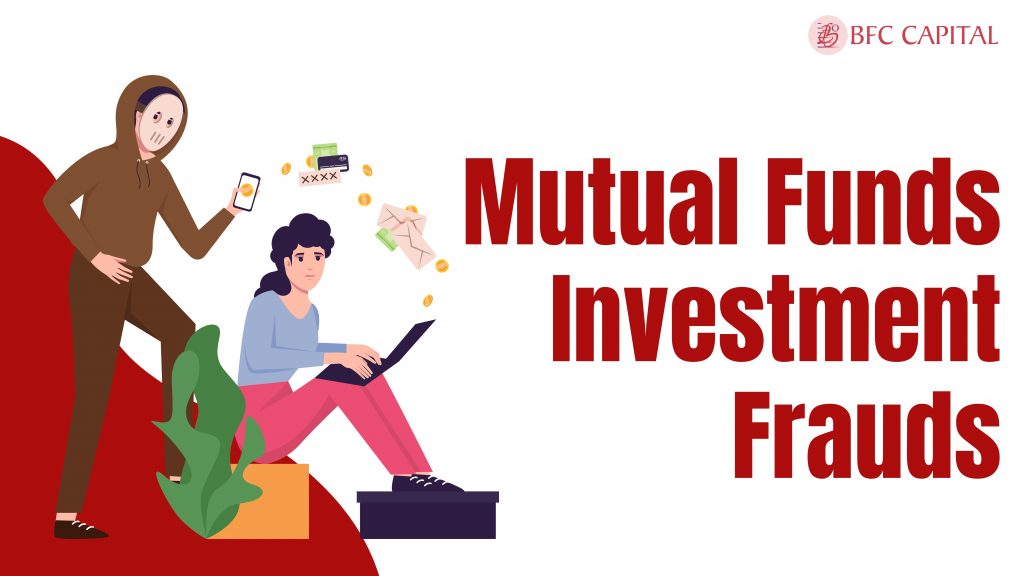
Imagine that you are saving up your income to buy your ideal house. Then you decide to invest your savings in a mutual fund to grow your wealth. Your financial advisor mentors and guides you, and you are confident that your money is safe. What happens when this dream turns into a nightmare? Your financial advisor misplaces your trust and prioritizes expanding their fortune. This scenario is not uncommon.
Mutual fund investment fraud can manifest itself across any situation in diverse forms. You might have seldom heard your peers recall stories of falling victim to high-pressure marketing tactics muddied with hidden fees and potential risks. Or in another case, you may have often come across headlines about Ponzi schemes disguised as legitimate investments. Such cases of financial fraud have left countless individuals and families devastated.
This leaves very little space for negligence instilling an urgent need to acquire a basic knowledge of mutual investment fund fraud.
Unmask the Deception: Explore Mutual Fund Investment Fraud
Mutual investments are frequently vouched for as a haven for investors like you. However, in reality, even secure investments can fall victim to fraudulent schemes. In the current age of highly advanced technology, mutual investment fraud has taken on indistinguishable forms.
Hence, it is crucial to update yourself with an in-depth knowledge of mutual fraud. You must ensure that your savings are working for you, not against you, by constantly updating yourself on the latest financial occurrences.
- How Churning Serves Your Advisors’ Self-Serving Interests
In a churning scheme, one of the most common forms of investment fraud, the advisors trade your account excessively to generate commissions for themselves. They may encourage frequent trades under the pretense of maximizing returns. This can only result in significant losses for you due to an inconceivable rise in transaction fees and tax implications.
- Breakpoint Frauds: Why Bigger Is Not Always Better!
Breakpoint fraud occurs when financial advisors encourage you to buy shares just below the threshold. This results in reduced commission rates, whereas the advisors earn higher commissions for themselves. The practice, obviously deceptive, raises your costs. It also undermines the overall logic of cost-effective investments.
As a preventative measure, you should be aware of the breakpoint structure. This ensures transparent insight into commission rates before finalizing any financial advisor.
- Misrepresenting the Potential Risks of Investments
Fraudulent financial advisors may misrepresent mutual fund risks and also exaggerate potential returns. Without any proper knowledge, you give precedence to their false promises that result in uninformed decisions.
Conducting meticulous research and studying the risk-return profile of any mutual fund before finalizing your investment plans is a simple way to prevent potential risks.
- Unauthorized Trades and Unexpected Losses
The commonplace understanding of unauthorized trading is when the financial advisor makes unconsented trades in your account. This is a clear violation of fiduciary duty that results in unexpected losses.
To avoid this, you should schedule regular reviews of the account statements and ensure that the transactions are authorized. Your account statement must also align with the planned investment strategy.
- Ponzi Schemes Camouflaged as Legitimate Investments
The Ponzi scheme is merely a diluted form of an investment scam. They are not exclusive to mutual funds but masquerade themselves as legitimate investment opportunities. In this scheme, your capital is used to pay the returns to the clients preceding you. The big profit, earned henceforth, lacks legitimacy.
This is an unsustainable model that inevitably collapses, leaving you and your succeeding investors with huge financial losses.
- Pump and Dump – Misleading Your Account Statements
Financial fraudsters may sometimes inflate stock prices with misguided positive statements. This is known as the pump-and-dump scheme. They sell their shares at a profit after the price has fallen, leading to several time-engaging insecurities.
While this scheme may not affect the mutual funds directly, the manipulation of the stocks the funds hold may impact them. The pump-and-dump fraud is highly prevalent across less-regulated markets and requires periodic vigilance on your part.
Preventive Measures to Safeguard Your Savings and Investment Plans
As a regular investor, you need to learn how to protect yourself. Strategically outlined preventive measures aid in safeguarding your investment plans. These measures should be characteristically proactive i.e., include thorough research, detailed questioning, and monitoring investments. Also, most significantly, avoiding high-pressure marketing techniques.
The first step to prevent any mutual fund fraud is to understand its basics. The basics have to include how mutual funds work, the types of funds, and associated risks. Today, you have several online resources and educational programs at your disposal to enhance your ‘investment knowledge’. You become less susceptible to the deceptive practices of financial fraud when you are aware of the necessary intricacies.
Moreover, the second step includes reporting and eliminating investment fraud. Any fraudulent activity in your investment account should be reported to the SEBI, IRDAI, or AMFI. Prompt reporting protects you and widens protection for the entire investing community.
The Securities and Exchange Board of India (SEBI) maintains that internal fraud detection mechanisms have led to a handful of reforms. These include new regulations against front-running and insider trading. They also focus on verification checks on digital investment platforms, and increased vigilance on investors’ account statements.
Besides the available reforms, use regulatory resources, such as SEBI, or financial advisors to make informed investment decisions. Remember that you are a key player in mitigating mutual fund fraud. Focus on taking swift action and save your interests.
Be Aware, Be Educated: Use the Right Resources for Your Future Investments!
Investing in mutual funds is not perceived as a safe option due to a higher risk profile as compared to bank fixed deposits. However, there are measures you undertake or are set in place, to ensure safe investment opportunities for yourself and the community.
Trust only market intermediaries that are registered with SEBI – often when the returns are high, the investment holds high-risk potential. The regulatory bodies such as the Association of Mutual Funds in India (AMFI) and the Securities and Exchange Board of India (SEBI), maintain a safer environment for investors like you.
Moreover, Barclays reported that 33% of the total money has been lost to mutual fund investment fraud. With priorities set in stone, the last thing you want is to face a mutual fund fraud. Your retirement plans can face a setback when your hard-earned savings are robbed. Your priority lies in understanding mutual fund investment before you commit to any.
Don’t let mutual fund investments catch you off guard. It is recommended to conduct research and study about mutual funds before you invest. At the end of an investment, you are the foundation of a safer financial landscape.
Please share your thoughts on this post by leaving a reply in the comments section.
Also, check out our recent post on: “What Is TER (Total Expense Ratio) & How to Calculate It”
To learn more about mutual funds, contact us via Phone, WhatsApp, Email, or visit our Website. Additionally, you can download the Prodigy Pro app to start investing today!
Disclaimer – This article is for educational purposes only and by no means intends to substitute expert guidance. Mutual fund investments are subject to market risks. Please read the scheme-related document carefully before investing.