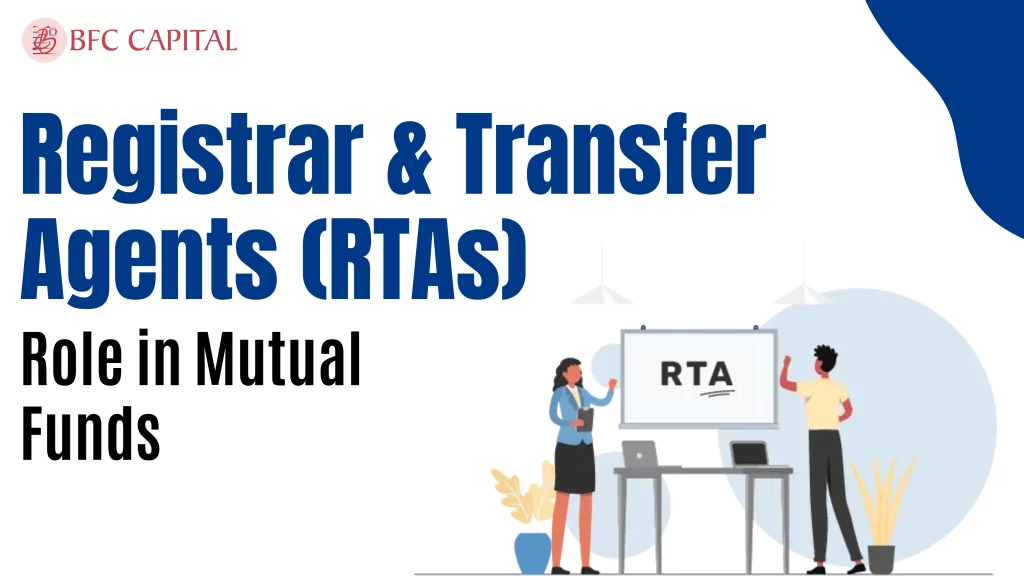
Registrar and Transfer Agents
If you have been on the investment journey for a long time, then Registrar and Transfer Agents won’t be a new thing for you. But the beginners often get confused about which fund to pick. How do you start investing in that? & most importantly, which platform to choose? But behind the scenes, there is basically a group of people who make sure that everything runs well. These groups of people are called Registrar and Transfer Agents or Registrar and Transfer Agents.
Let’s understand this with an example: Consider the RTAs as the backstage crew of a movie. When any movie is released, the audience only talks about the actors, but the invisible people behind the scenes take care of the props, timing, camera, lights, and others. The same way RTAs work in your investment journey ensures that your investments are managed securely and efficiently.
Here in this blog, we will explain the meaning of Registrar and Transfer Agents and their roles. So let’s get started.
RTA Full Form – Registrar and Transfer Agents
Who are the Register and Transfer Agents, or RTAs?
An RTA is an organisation of a company that keeps all the records for mutual fund houses. Their ultimate job is to manage and maintain all the records of an investor, provide all the customer service, and process transactions. Whenever you are making any actions like switching, redeeming, investing, or updating any details in your mutual fund investment, the RTA will do all the paperwork. Nowadays, these are on digital platforms.
There are two major Registrar and Transfer Agents you will hear about in India. Most of the MF houses are partnered with these RTAs. These are,
- CAMS (Computer Age Management Service – CAMS).
- KFin Technologies (formerly Karvy Fintech).
How to interact with Registrar and Transfer Agents?
As we already mentioned, Registrar and Transfer Agents do the background work but in the digital mode. For beginners, knowing the way of interaction is necessary to track their investment. Here are the ways,
- If you are using CAMS, then go to its website and view all your investments there. But before that, make sure whether your MFs are managed by CAMS or not.
- Aside from the website, there is an app called myCAMs. For KinTech, the app is known as KFinKart.
- Here you can request your consolidated account statement to see all your holdings.
- Here you can update your mobile number, email address, and even bank details.
- Another good thing is that here you can easily generate capital gain statements for your ITR filing.
Roles Of Registrar and Transfer Agents
When it comes to registering and transferring agents, the first question that comes to your mind is their role. What exactly do they play in an investor’s journey? Get the answer right below,
- Records Maintenance
Whenever any investors invest in a mutual fund, a record is created. The record is created with some basic details like name, contact info, PAN and KYC status, details of the bank account, investment history, nominee information, and mode of holdings. Nowadays, with the help of software, this information is kept securely.
- Customer Service
If you have any questions about your portfolio, you can reach out to customer service. Aside from this, if you want to update your bank account or need your account statement, then RTA provides the service via email, call, mobile apps, online portals, and also physical service centres in a few cities.
- Processing The Transaction
RTA steps in whenever you make any transactions like investing money, redemption of units, or switching between other funds and others. It validates the request, updates your folio, processes the service with the respective MF, and issues transaction confirmation. Without the help of RTA, managing all the transactions would be impossible, but RTA does it not only quickly but also efficiently.
- Generates Statement
With the help of RTA, you can easily download the consolidated account statement through the RTA app or website. Moreover, it also sends capital gain statements, tax-related summaries, and periodic reports.
- Helps Advisors
Aside from the investors, it helps the advisors and the distributors as well, who use RTA platforms. It helps them by tracking the investments of clients, it helps generate reports for the clients, managing commissions, and also helps in submitting new investment applications.
- KYC Checks
KYC compliance is a need for every investor, and RTA helps MF houses carry out KYC checks by validating identity and address, submitting reports to SEBI, and also by collecting documents.
Closing Up
You may not see the efforts of RTA as an investor, but the role they play in the investment journey is exceptionally important. Without RTA it would be impossible for the entire industry to function efficiently. The investors would face endless trouble as well. So no matter whether you are an experienced investor or a beginner, knowing the role of register and transfer agent is essential to understand how the investment process runs.
We hope you got your answer!
Please share your thoughts on this post by leaving a reply in the comments section. Contact us via Phone, WhatsApp, or Email to learn more about mutual funds, or visit our website. Alternatively, you can download the Prodigy Pro app to start investing today!
Disclaimer – This article is for educational purposes only and does not intend to substitute expert guidance. Mutual fund investments are subject to market risks. Please read the scheme-related document carefully before investing.