Trading and Investing
Trading and investing are two wealth-creation and wealth-building strategies that are traditionally implemented in the world of finance. While both approaches seek to generate wealth, the two approaches utilise different strategies, mindsets, and risks. Clearly understanding these differences will undoubtedly be important for any stock market enthusiast. Whether you’re looking to build long-term financial security through investing or want to take advantage of short-term market swings through trading, understanding how trading and investing operate will help you make better decisions.
In this article we will dive deep into understanding what trading and investing are, look at their key differences, examine their pros and cons, and to give you the information you need to make the best decision for you and your financial goals, and risk tolerance.
What is Trading?
Trading consists of buying and selling assets- stocks, currencies, commodities and derivatives – to profit on the ultimately fleeting price changes in markets. Trading is about profiting from short-term gains ranging from a few seconds to several months.
The trading environment quickly moves through prices influenced in real-time by market sentiment, economic and earnings news, political considerations and unusual breaking news. Traders try to take advantage of the new price whether the market is climbing or falling by timing their entry strategy and exit strategy.
There are different styles of trading depending on how frequently trades are executed:
1. Day Trading
The trading of assets for immediate purchase and sale takes place within the single trading day. Positions are not held overnight.
2. Swing Trading
This involves holding assets for several days or weeks to profit from expected upward or downward price swings.
3. Position Trading
A longer-term form of trading that involves holding positions for weeks or even months, though still shorter than traditional investing.
For successful trading, one must possess both fundamental knowledge of technical tools such as charts and patterns, alongside risk mitigation skills and commitment to established trading systems.
Trading offers significant rewards but begins with substantial danger for its participants.
Characteristics of Trading
1. Time Horizon
Trading occurs within short periods that span from minutes in day trading up to several months. The focus is on quick profits through frequent transactions.
2. Risk Level
Trading carries increased risks because markets show continuous movement and volatility. Monitoring activities and immediate decision-making actions make up this approach.
3. Analytical Approach
Traders mainly rely on technical analysis, which involves studying price charts, patterns, and indicators to predict short-term market movements.
4. Capital Gains
Capital gains from trading actions qualify as short-term because such profits generate tax obligations at higher rates compared to tax regimes for long-term investments.
What is Investing?
Investing functions as a long-term financial approach through which people acquire assets including stocks bonds mutual funds or real estate to create wealth over time. Investors tend to keep these investment assets for numerous years and decades because they expect their value to increase.
Investors receive both dividend payments from stock ownership and interest distributions from bonds, which produce additional earnings through compound interest accumulation.
There are different styles of investing:
1. Value Investing
The strategy involves acquiring stocks with robust fundamentals at prices below their intrinsic value, together with strong growth prospects.
2. Growth Investing
This strategy focuses on seeking companies that demonstrate higher growth rates than typical market performance regarding revenue and earnings.
3. Income Investing
This strategy involves choosing assets like dividend-paying stocks or bonds that provide a steady stream of income.
Characteristics of Investing
1. Time Horizon
Investing is usually done with a long-term goal in mind, often stretching over several years or even decades.
2. Risk Level
The risk levels associated with investment activity remain lower than those of trading because it demonstrates less sensitivity to short-term market movements.
3. Analytical Approach
Investors rely mainly on fundamental analysis, studying a company’s financial health, performance, and long-term potential.
4. Capital Gains
Investors can benefit from long-term capital gains tax rates when they achieve investment profits because they stay invested for at least 12 months.
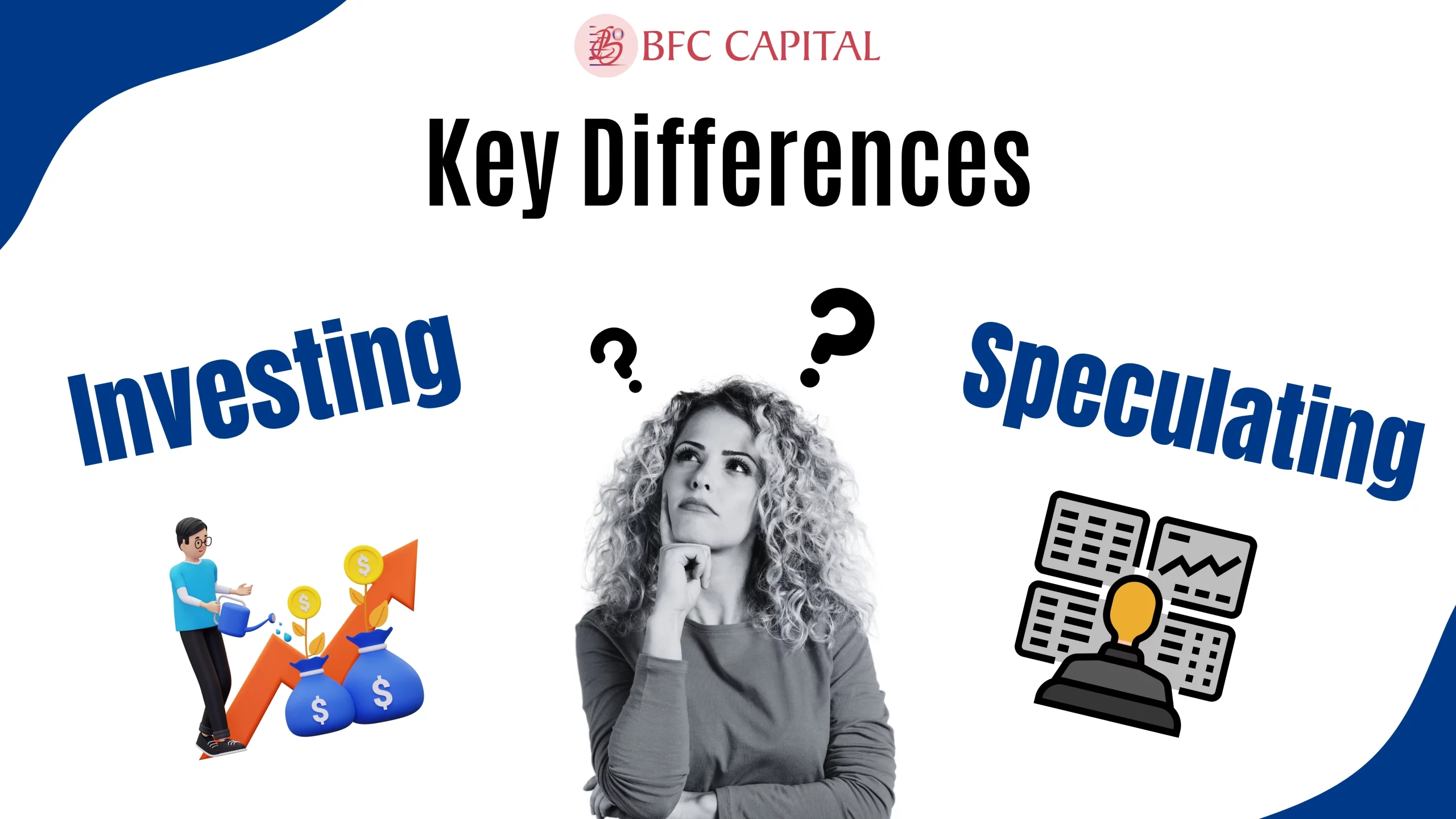
Key Differences Between Trading and Investing
Both trading and investing as financial market wealth growth strategies require opposite approaches that diverge regarding their strategic methods and required time dedication and tolerance of risk levels. Let us examine the main distinctions between these financial techniques.
| Factor | Trading | Invetsing |
| Time Horizon | Short-term (Minutes, hours, days, or months) | Long-term (years, or even decades) |
| Objective | Quick profits by capitalising on the market | Gradual wealth accumulation over time |
| Risk Level | High, due to frequent trades and market volatility | Lower, as it involves holding through market ups and downs |
| Analysis Approach | Technical analysis (charts, price patterns, indicators) | Fundamental analysis (company performance, financials, industry outlooks) |
| Tax Implication | Subject to short-term capital gains tax (often at a higher rate) | Eligible for long-term capital gains tax (typically at a lower rate) |
| Instruments Used | Stocks, options, futures, forex | Stocks, bonds, mutual funds, and exchange-traded funds |
Trading vs Investing: Strengths & Weaknesses
| Aspect | Trading | Investing |
| Strengths | – Quick profit potential- Leverage market volatility- Suitable for active market followers | – Compounding returns over time.- Lower transaction costs over the long run- Less stressful once set up |
| Weaknesses | – High risk due to volatility- Requires constant monitoring- Can lead to emotional decision making | – Slower wealth buildup- Vulnerable to market cycles.- Requires patience and discipline. |
Which One Is Right For You?
Your decision to Trading and Investing should depend on your financial objectives, together with your tolerance for risk and your available tim,e as well as your approach to the market.
🔹 Choose Trading If…
→ The type of environment that suits you includes fast movement combined with quick decision-making ability.
→ You possess enough time to both observe market conditions and conduct buying and selling activities.
→ The presence of high risk, together with market volatility, does not worry you.
→ Your goal involves generating profit, which needs to happen within days or weeks, or months.
🔹 Choose Investing If…
→ You believe passive wealth development over extended durations requires minimal intervention.
→ Market price swings of brief durations do not bother you.
→ Financial security and steady wealth growth represent your approach to developing wealth over multiple years.
→ Your ability to have discipline as well as patience allows you to stay committed to your investments through market changes.
Pro tip:
Most investors maintain their portfolios by dedicating most funds to long-term investments but still keeping aside a small amount for trading activity to achieve short-term earnings along with market involvement.
The correct financial decision should match your life approach, together with your purposes and risk tolerance.
Also, check “Investing in Real Estate Mutual Funds?“
Conclusion
Trading and investing are two distinct paths to wealth creation, each with its own set of strategies, risks, and rewards. While trading uses short-term market volatility to obtain immediate gains, investing builds sustainable wealth through extended asset growth. Understanding your financial plans, combined with investing risk capacity and time available for investment, allows you to select an optimum plan, which might require a combination of both options.
The success in financial growth depends on staying informed and disciplined together with making decisions based on your personalized financial path.
Please share your thoughts on this post by leaving a reply in the comments section.
To learn more, contact us via Phone, WhatsApp, Email, or visit our Website.
Alternatively, you can download the Prodigy Pro app to start investing today!
Disclaimer – This article is for educational purposes only and does not intend to substitute expert guidance. Mutual fund investments are subject to market risks. Please read the scheme-related document carefully before investing.