Fixed vs Floating Rate Loan
When it comes to avail a loan in India such as a simple home loan, personal loan, or education loan, interest rate is one of the key considerations that plays a big role in determining the cost of the overall borrowing. The borrowers in India are generally offered two important options when it comes to interest rates: Fixed Rate Loans and Floating Rate Loans.
Since both kinds have their pros and cons, choosing the appropriate one is subject to the financier’s objectives, risk appetite, and viewpoint of the market. This article will make you aware of the difference between floating and fixed interest rate loans in the backdrop of the Indian loan market, their pros and cons, when to choose which one and more.
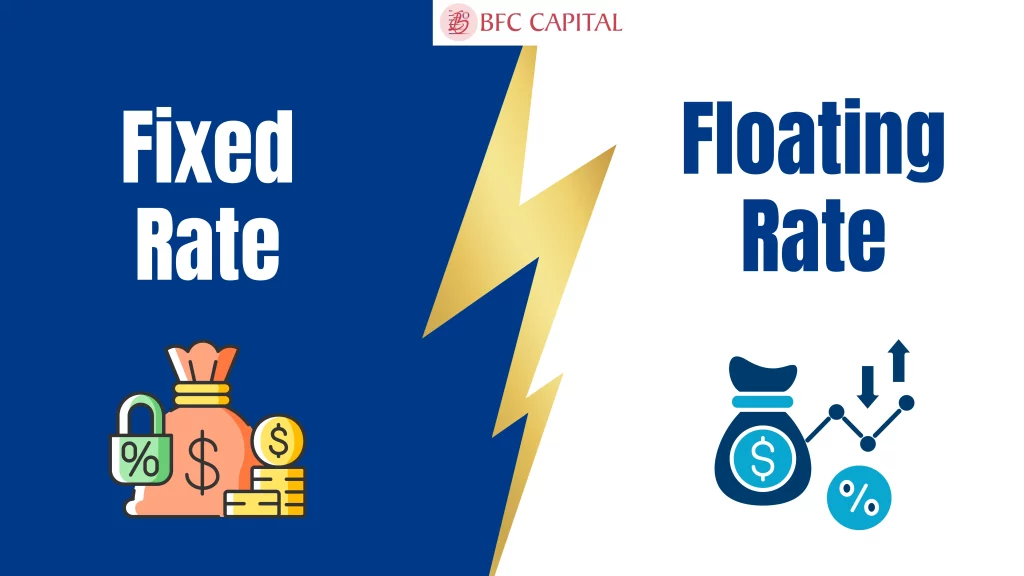
What is a Fixed Rate Loan?
For an entire duration of the loan when the interest rate is fixed, it is known as the fixed rate loan. It may not change due to any modifications made in the Reserve Bank of India’s (RBI) repo rate or the inflation, the EMIs amount will still stay the same.
Key Features:
- Predictable monthly EMI
- Immunity from market fluctuations
- Easier financial planning
Popular in:
- Home loans
- Car loans
- Long-term personal loans
Example:
Let’s consider that you take a ₹20 lakh home loan at a fixed rate of 9% per annum for 20 years. Your EMI and interest outgo remain the same, no matter how much changes occur in the RBI repo rate.
What is a Floating Rate Loan?
Popularly known as the variable rate loan, a Floating Rate Loan, has an interest rate that changes periodically, and it entirely depends on benchmark rates such as the RBI repo rate, MCLR (Marginal Cost of Lending Rate), or external benchmark rates. As these benchmark rates might see changes and fluctuations, the applicable loan interest rate also adjusts depending on these changes.
Key Features:
- EMI may change during the loan tenure
- Benefits when market interest rates decline
- Typically starts with a lower rate than fixed loans
Popular in:
- Home loans
- Education loans
- Loan Against Property (LAP)
Example:
If you take a loan at a floating rate linked to RBI’s repo rate (say repo + 2%), and the repo rate is 6.5%, your current interest rate would be 8.5%. If the repo rate falls to 6.0%, your rate comes down to 8.0%, reducing your EMI or tenure.
Comparison: Fixed vs Floating Rate Loan
| Parameter | Fixed Rate Loan | Floating Rate Loan |
| Interest Stability | Constant | Fluctuates with market rates |
| EMI | Fixed | Variable |
| Planning | Easy | Requires adjustment |
| Initial Interest Rate | Slightly higher | Usually lower |
| Benefits from Rate Cut | No | Yes |
| Penalty on Prepayment | Often applicable | Usually NIL (as per RBI norms) |
| Risk Factor | Low | Moderate to High |
Advantages & Disadvantages of Fixed Rate Loans
Advantages of Fixed Rate Loans
- Predictability: With no change in EMI, budgeting becomes easier.
- Protection from Hikes: Safe during high inflation or rising interest cycles.
- Long-Term Stability: Borrowers with long repayment horizons can find it these loans ideal.
Disadvantages of Fixed Rate Loans
- Higher Initial Rate: Typically 0.5% to 2% more than floating loans.
- No Gain from Market Drop: You lose the advantage if RBI reduces rates.
- Costly Prepayment: Some banks charge a penalty for preclosure.
Advantages & Disadvantages of FLoating Rate Loans
Advantages of Floating Rate Loans
- Lower Initial Interest: Saves money in the early years.
- Benefit from Falling Rates: EMIs reduce if RBI slashes the benchmark.
- Flexible Repayment: Often no penalty on part or full prepayment.
Disadvantages of Floating Rate Loans
- Uncertainty: EMI or tenure may increase unexpectedly.
- Difficult to Plan: Budgeting for long-term expenses becomes tricky.
- Impact of Monetary Policy: Your loan is directly impacted by RBI’s stance.
What Does the RBI Say?
As per RBI’s directives (2020 onwards):
- Floating rate loans must be linked to external benchmarks such as the repo rate or Treasury Bill rate.
- Lenders must ensure transparency in interest rate movements.
- No prepayment charges are allowed on floating rate home loans by individuals.
When to Choose Fixed Rate Loans in India
- When interest rates are low and expected to rise
- If you are a salaried individual with a fixed income
- If you want certainty in EMI payments
- If you are taking a long-term loan (>10 years)
When to Choose Floating Rate Loans in India
- When interest rates are high and expected to drop
- If you have flexible income (e.g., business owners)
- If you can tolerate moderate financial risk
- If you want to prepay your loan early without penalties
Trends in the Indian Loan Market (2025 Outlook)
As per latest trends in 2025:
- Repo-linked lending has increased across banks and NBFCs.
- Floating rate home loans dominate the market (~65-70% share).
- Smart borrowers are choosing hybrid loans, which offer a fixed rate for 2-3 years and then switch to floating.
- Women borrowers and salaried professionals are increasingly opting for fixed rate personal loans due to income stability.
Tips Before Choosing Between Fixed vs Floating Rate Loan
- Evaluate Market Conditions: Track RBI’s repo rate trends.
- Understand Loan Terms: Ask for detailed break-up of EMIs.
- Calculate Impact: Use EMI calculators for both scenarios.
- Check Foreclosure Rules: Especially if you plan to repay early.
- Read the Fine Print: Look for reset clauses, conversion fees, etc.
Also, Check – Secured Loan vs Unsecured Loan in India
Conclusion
Selecting between a Fixed vs Floating Rate Loan is not only a financial thought idea but also depends on your strategy and presence of mind. While fixed rate loans provide comfort and certainty, floating rate loans, on the other hand, can provide savings in the suitable interest rate environment. In the growing loan market in India, it makes sense to gauge your financial health, risk capacity, and market sentiment before committing yourself to a rate framework.
Whether you plan to purchase a home, saving to study, or planning a business takeover, your knowledge of your loan plan will enable you to make wiser financial decisions and, by chance, save lakhs of rupees over the loan tenure.
Please share your thoughts on this post by leaving a reply in the comments section. Contact us via phone, WhatsApp, or email to learn more about mutual funds, or visit our website. Alternatively, you can download the Prodigy Pro app to start investing today!
Disclaimer: This article is for educational purposes only and does not intend to substitute expert guidance. Mutual fund investments are subject to market risks. Please read the scheme-related document carefully before investing.