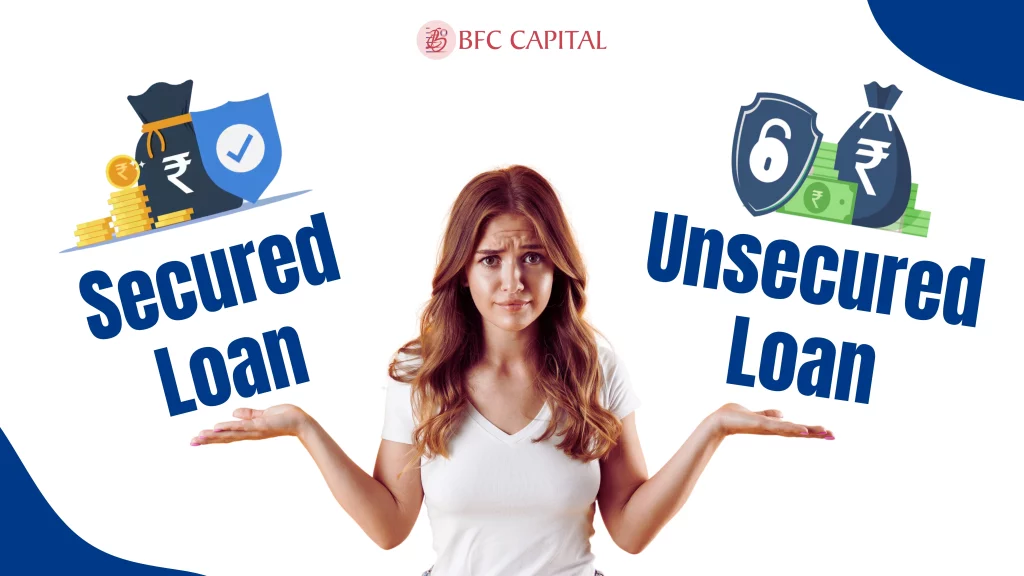
Secured Loan vs Unsecured Loan
In India’s developing financial arena, credit plays a very important role in allowing ambitions. Whether one is purchasing a house, funding a child’s education, expanding a business, or even managing emergencies, loans provide a lifeline. But not all loans are developed to be equal or of the same character. The Indian loan market has come up with two major types of loans which are the Secured Loan vs Unsecured Loan types, and having an understanding about the difference is important for making smart borrowing decisions.
In this article we will discuss the differences, benefits, disadvantages, and actual considerations of both secured and unsecured loans in India and will come up as a guide to help the readers make informed choices not only in 2025 but also beyond that.
What is a Secured Loan?
A secured loan is defined as a type of loan that requires the borrower to pledge an asset (called collateral) to the lender. This could be in the form of property, gold, fixed deposits, or even vehicles. Suppose that if the borrower is not able to pay back the loan, the lender can recover that amount by selling the collateral.
Common types of secured loans in India:
- Home Loans
- Loan Against Property (LAP)
- Gold Loans
- Car Loans
- Loan Against Fixed Deposits or Insurance Policies
Features:
- Lower interest rates (ranging from 8%–11% per annum for most secured loans)
- Longer repayment tenure (up to 30 years for home loans)
- Higher loan amount eligibility
- Credit score flexibility — since the asset mitigates risk
What is an Unsecured Loan?
An unsecured loan is a type of loan which is purely based on the borrower’s creditworthiness—without the need for any asset as collateral. These loans are usually lesser in value and usually have higher interest rates, showcasing the higher risk to the lender.
Common types of unsecured loans in India:
- Personal Loans
- Education Loans (partially secured/unsecured based on lender policy)
- Credit Card Loans
- Consumer Durable Loans
- Business Loans (unsecured type)
Features:
- No need of collateral
- Faster processing along with disbursement
- The interest rates are usually higher (10%–26% per annum depending on borrower profile)
- Small repayment periods (usually 1–5 years)
Key Differences Between Secured Loan vs Unsecured Loan
| Criteria | Secured Loans | Unsecured Loans |
| Collateral | Required | Not required |
| Interest Rate | Lower | Higher |
| Loan Amount | Higher loan value possible | Lower loan value |
| Processing Time | Longer due to collateral assessment | Faster |
| Credit Score Impact | Less dependent on credit score | Highly dependent on creditworthiness |
| Risk to Borrower | Asset at risk if default occurs | No asset risk, but legal action possible |
Pros and Cons of Secured Loans
Advantages:
- The EMIs are affordable because of lower interest rates
- Te approval chances are also higher, especially for low-credit-score borrowers
- The repayment terms are flexible
Disadvantages:
- Risk of losing the pledged asset
- Longer approval time
- Documentation can be complex
Pros and Cons of Unsecured Loans
Advantages:
- No need to pledge any asset
- Within 24-48 hours, there is a quick disbursal
- It is ideal for emergencies and short-term needs
Disadvantages:
- High interest burden
- Stringent eligibility criteria
- Smaller loan amounts
Secured Loan vs Unsecured Loan: Which one to choose?
- Purpose of the Loan:
If one is looking for long-term investments (such as buying a home, business expansion), secured loans are ideal.
For short-term needs such as medical emergencies, weddings, unsecured loans are more preferable.
Asset Availability:
- If you own an asset and are comfortable pledging it, a secured loan can help you access higher funds at better rates.
- Credit Score Health:
- If you have a low credit score, going for a secured loan increases your chances of approval.
- Urgency of Funds:
- For instant needs, personal loans or credit card advances work best.
- Interest Rate Sensitivity:
- If keeping EMIs low is critical, go with secured loans
Indian Loan Market Trends: 2025 Outlook
Since India is a leading landscape of investments as of 2025 and it is experiencing rapid digitization along with growing financial inclusion. As per the RBI data and industry reports:
- An increase of 25%YoY was observed in Personal loans in 2024.
- Gold loans along with loans against property, saw an increase in popularity among MSMEs.
- Fintech platforms have come to make unsecured lending easier with e-KYC and AI-based risk assessments.
Risks to Watch Out For
Regardless of the loan type, always make sure to read the fine prints on the form. Key points which should be kept in mind are:
- Hidden charges: Look for all the Processing fees, prepayment penalties, and foreclosure clauses.
- Credit score impact: If there are defaults on either type of loan it may hurt your credit report.
- Fraudulent lenders: Make sure to choose RBI-registered banks or NBFCs.
Also, check – How to Increase Your Credit Score in India
Conclusion
Secured Loan vs Unsecured Loan have different profiles depending on the needs of the borrower. In a developing country like India—as the financial needs are growing and evolving—it is needed to understand these two loan categories in order to avoid the debt traps and even to get the knowledge of the financial goals.
One of the best loans for the borrower is that not only meets his/her wants but also fits securely within your financial limits. Borrow the money smartly, repay it timely, and leverage the growing opportunities of India’s credit ecosystem to your advantage.
Please share your thoughts on this post by leaving a reply in the comments section. Contact us via Phone, WhatsApp, or Email to learn more about mutual funds, or visit our Website. Alternatively, you can download the Prodigy Pro app to start investing today!
Disclaimer – This article is for educational purposes only and does not intend to substitute expert guidance. Mutual fund investments are subject to market risks. Please read the scheme-related document carefully before investing.